 National service hotline:+86(0)755-2898 7706

As a Costco supplier, the compliance of your pallet loading directly impacts the warehousing efficiency, shelf speed, and display effectiveness of your products. Based on official standards, here is a professional set of operational specifications and technical points.
Ⅰ. Technical Requirements for Unit Load and Pallet Configuration
1. Load Size Specifications
- The footprint of a unit load must not exceed 48"×40" (121.9 cm × 101.6 cm) and must not be smaller than 45"×37" (111.8 cm × 94 cm). Overhang or underhang of goods beyond the pallet edges is strictly prohibited.
- The recommended standard footprint is 47"×39" (119.4 cm × 99.1 cm). Exceptions are only granted for oversized goods.
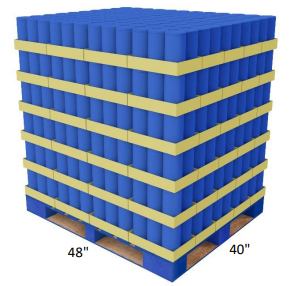
2. Stacking Stability and Structural Restrictions
- The pallet’s carrying area must be maximized, ensuring no gaps exist between sell units or master cartons.
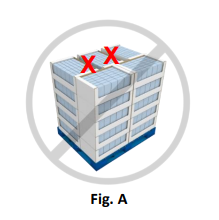
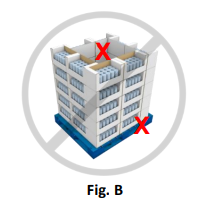
- "Chimney stacking" is strictly prohibited, as this method compromises the overall structural stability of the load.
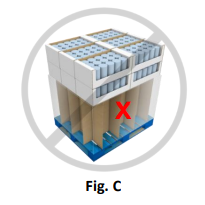
- "False bottom" packaging with empty cavities beneath the goods is prohibited unless specifically requested in writing by Costco.
- For sell units with a small footprint, layer pads or grip sheets are required to enhance interlayer friction and prevent slippage.
3. Packaging Adaptability Optimization
- Primary packaging, display trays, and master cartons must be designed to fit precisely with pallet dimensions.
- It is recommended to verify packaging-to-pallet compatibility through reverse engineering to avoid loading discrepancies.
Ⅱ. Pallet Layout and Merchandising Orientation Specifications
1. Definition of Primary Merchandising Side
The 48" (121.9 cm) side is designated as the primary merchandising face of the pallet, serving as the core display dimension in both warehousing and retail environments.
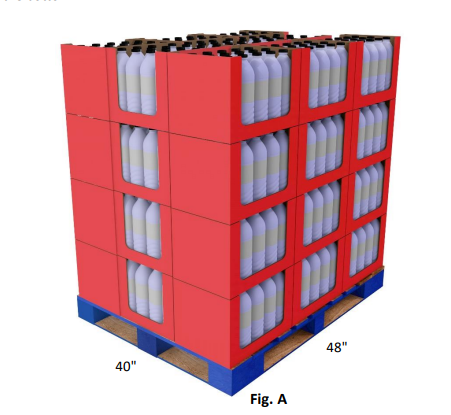
2. Category-Specific Layout Requirements
- Dry Goods:
1. A pallet orientation allowing three-way or four-way access is preferred, as it maximizes flexibility for end-cap merchandising.
2. At minimum, goods must face one 48" long side and one 40" (101.6 cm) short side to accommodate both inline and end-cap merchandising needs.
- Cooler/Freezer Items: Goods must face the 48" long side to align with the design logic of cold-chain shelving.
- Non-Merchandised Items (e.g., deli products, books): Orientation may be chosen flexibly, with no mandatory display direction.
3. Stacking and Load Distribution Principles
- Use column stacking to enhance overall stacking strength and resistance to tipping.
- For oversized goods or multi-box sell units, the largest and heaviest boxes must be placed at the center-bottom of the pallet to optimize load center-of-gravity distribution.
For further questions regarding Sam's Club packaging solutions, please contact CTK!
Products
Pod Display
Color box
Pdq
Display
Mobile: +86-135 9046 8765/136 6260 0846
E-mail: alan@ctk-hk.com
Tel: +86(0)755-2898 7706
WeChat: 135 9046 8765
Website: www.ctk-hk.com
Add: Building 16, AIPARK, No.2, Baolong 4th Rd., Longgang District, Shenzhen, China


Copyright 2004-2024 CTK PACKING ASIA . All Rights Reserved.